
Discussion - Member to Member Sales - Research Center
Discussion - Member to Member Sales - Research Center

 e any advice/input. Thanks, Jerry
Maybe a chemical reaction with a certain batch of paper?
Also not to much of a NZ expert myself.

Login to Like
this post
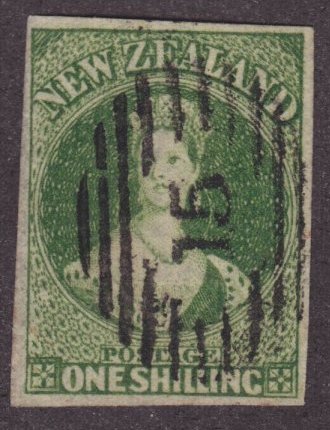
May we see the front, please?
Login to Like
this post

09:09:10pm
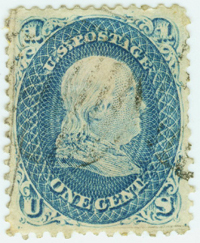
Any picture I can find of this stamp seems to have an even look to the blue colour that the back of this stamp doesn't seem to have. This bothers me a bit! I collect NZ but don't have much of the early material but stamps I have from other countries that are on blue paper have a very even blue colour. For example check out Ecuador #2c below.

2 Members
like this post.
Login to Like.
Harvey,
That's a nice Ecuador set!
Login to Like
this post
The blueing is an artifact of the printing process. The paper itself was not blued. The blueing was the result of a (unexpected) chemical reaction between prussiate of potash (added to the paper with the intent of making cancellations hard to wash out) and something in the paper, currently assumed to be sizing (a glue like ingrediant to hold the paper fibers together). All of these blued stamps were printed by Perkins-Bacon from 1853-1857 when the prussiate of potash was removed from the printing ink as a cost savings measure.
You can find more about this here:
Edward Bacon, "The Line-Engraved Postage Stamps of Great Britain Printed by Perkins Bacon & Co. Vol 1", Published by Chas. Nissen & Co., Limited in 1920. It is out of copyright and readily available as a free pdf on the internet: pages 110-113.
https://www.gbps.org.uk/information/downloads/postage-stamps/The%20Line-Engraved%20Postage%20Stamps%20of%20Great%20Britain,%20Vol%201%20-%20Edward%20Denny%20Bacon%20(1920).pdf
Below is an example where you can see that the blueing is from the printing process rather than the kind of paper used:

4 Members
like this post.
Login to Like.
Wow, Jack!
That's really good info.
I hope the poster sees this.
-Ari
Login to Like
this post
11:16:17am
For early Nova Scotia and New Brunswick stamps Unitrade says "printed on blue paper". Are they wrong or is this a different case? The ones I have actually seem to be printed on really light blue paper with a uniform colour. Actually there were sets of fakes done on white crisp paper. It's no sense showing a scan since the blue is so light it is almost difficult to see at times. Just curious if "bluing" means the same as "blue paper".
I will show a scan of my early NS but you probably can't see the blue paper easily, but no harm in showing!! The page will be difficult to finish! All stamps on this page are supposed to be on blue paper.

3 Members
like this post.
Login to Like.
I believe that the case you pointed out (Nova Scotia and New Brunswick) is a different case. I don't believe the stamps you pointed to were printed by Perkins-Bacon and the year was 1851. I think catalogues are mostly correct as they go through many editors and rounds of publication. So blue paper is not the same as the blued paper.
Login to Like
this post
Would it be correct to say that blue paper was blue to begin with (ie before the stamp was printed on it) and that bluing happens from a chemical process during the printing?
Does bluing only happen on white paper or is it just not detectable on other colors?
Login to Like
this post
Blue paper has some kind of pigment or dye added when the paper is manufactured -- there are lots of kinds of colored paper.
Bluing was something that happened during/after the paper was printed with printing ink and was (an unintentional) chemical reaction between the printing ink and the paper. The amount of bluing varied for reasons that are still not completely understood.
Login to Like
this post
08:45:35pm
I just rechecked Scott's and they say #2 is "blued paper" caused by a chemical reaction whereas #3 - #5 is "blue paper". That little "d" is very important!!
Login to Like
this post

Approvals
re: New Zealand #2, "blueing"?
Maybe a chemical reaction with a certain batch of paper?
Also not to much of a NZ expert myself.
Login to Like
this post

re: New Zealand #2, "blueing"?
May we see the front, please?
Login to Like
this post
Back when I had a bunch! I think, therefore I am - I think! Descartes, sort of!
20 Jan 2025
09:09:10pm
re: New Zealand #2, "blueing"?
Any picture I can find of this stamp seems to have an even look to the blue colour that the back of this stamp doesn't seem to have. This bothers me a bit! I collect NZ but don't have much of the early material but stamps I have from other countries that are on blue paper have a very even blue colour. For example check out Ecuador #2c below.
2 Members
like this post.
Login to Like.
Approvals
re: New Zealand #2, "blueing"?
Harvey,
That's a nice Ecuador set!
Login to Like
this post

re: New Zealand #2, "blueing"?
The blueing is an artifact of the printing process. The paper itself was not blued. The blueing was the result of a (unexpected) chemical reaction between prussiate of potash (added to the paper with the intent of making cancellations hard to wash out) and something in the paper, currently assumed to be sizing (a glue like ingrediant to hold the paper fibers together). All of these blued stamps were printed by Perkins-Bacon from 1853-1857 when the prussiate of potash was removed from the printing ink as a cost savings measure.
You can find more about this here:
Edward Bacon, "The Line-Engraved Postage Stamps of Great Britain Printed by Perkins Bacon & Co. Vol 1", Published by Chas. Nissen & Co., Limited in 1920. It is out of copyright and readily available as a free pdf on the internet: pages 110-113.
https://www.gbps.org.uk/information/downloads/postage-stamps/The%20Line-Engraved%20Postage%20Stamps%20of%20Great%20Britain,%20Vol%201%20-%20Edward%20Denny%20Bacon%20(1920).pdf
Below is an example where you can see that the blueing is from the printing process rather than the kind of paper used:
4 Members
like this post.
Login to Like.
Approvals
re: New Zealand #2, "blueing"?
Wow, Jack!
That's really good info.
I hope the poster sees this.
-Ari
Login to Like
this post
Back when I had a bunch! I think, therefore I am - I think! Descartes, sort of!
21 Jan 2025
11:16:17am
re: New Zealand #2, "blueing"?
For early Nova Scotia and New Brunswick stamps Unitrade says "printed on blue paper". Are they wrong or is this a different case? The ones I have actually seem to be printed on really light blue paper with a uniform colour. Actually there were sets of fakes done on white crisp paper. It's no sense showing a scan since the blue is so light it is almost difficult to see at times. Just curious if "bluing" means the same as "blue paper".
I will show a scan of my early NS but you probably can't see the blue paper easily, but no harm in showing!! The page will be difficult to finish! All stamps on this page are supposed to be on blue paper.
3 Members
like this post.
Login to Like.
re: New Zealand #2, "blueing"?
I believe that the case you pointed out (Nova Scotia and New Brunswick) is a different case. I don't believe the stamps you pointed to were printed by Perkins-Bacon and the year was 1851. I think catalogues are mostly correct as they go through many editors and rounds of publication. So blue paper is not the same as the blued paper.
Login to Like
this post

re: New Zealand #2, "blueing"?
Would it be correct to say that blue paper was blue to begin with (ie before the stamp was printed on it) and that bluing happens from a chemical process during the printing?
Does bluing only happen on white paper or is it just not detectable on other colors?
Login to Like
this post
re: New Zealand #2, "blueing"?
Blue paper has some kind of pigment or dye added when the paper is manufactured -- there are lots of kinds of colored paper.
Bluing was something that happened during/after the paper was printed with printing ink and was (an unintentional) chemical reaction between the printing ink and the paper. The amount of bluing varied for reasons that are still not completely understood.
Login to Like
this post
Back when I had a bunch! I think, therefore I am - I think! Descartes, sort of!
21 Jan 2025
08:45:35pm
re: New Zealand #2, "blueing"?
I just rechecked Scott's and they say #2 is "blued paper" caused by a chemical reaction whereas #3 - #5 is "blue paper". That little "d" is very important!!
Login to Like
this post